sale! 25% off orders $25+ use code: early25
The Anatomy of a Bar
Deconstructing flavor, texture, structure
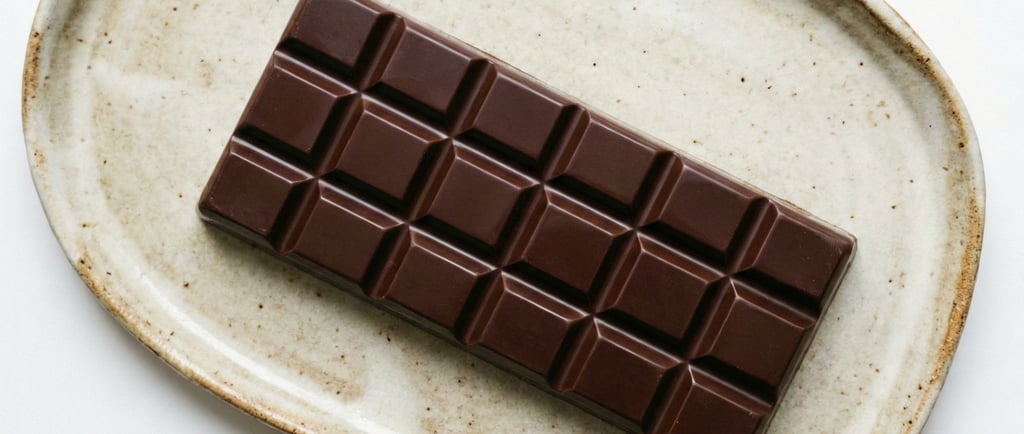
A snap, a melt, a rush of deep cocoa and caramel on the tongue – biting into a chocolate bar is a small everyday luxury. For a moment, time slows as the square of chocolate yields to warmth, releasing a bouquet of aromas and a silky cascade of flavor. But behind that simple pleasure lies an intricate alchemy of art and science. A chocolate bar may look uniform and straightforward, yet it is anything but simple. It is the culmination of a journey that spans equatorial cacao farms and hi-tech kitchens, ancient techniques and modern innovations. We rarely stop to consider how each element – the flavor we taste, the texture we feel, the very structure holding it together – has been carefully engineered and refined over centuries. In this exploration, we peel back the wrapper on the chocolate bar itself, to discover what makes it tick: how its flavor is built from the ground up, what gives it that luscious texture, and how its internal structure makes the magic possible. Whether you prefer dark, milk, white, or the new blush of ruby chocolate, understanding the anatomy of a chocolate bar will deepen your appreciation for every bite.
Flavor: From Bean to Bliss
The unmistakable flavor of chocolate is one of the most complex and beloved in the world. It can be decadent and fudgy, or hauntingly bittersweet. It can carry bright notes of red fruit, mellow hints of honey and vanilla, or deep tones of roasted coffee and nuts. How does a humble cacao bean – bitter, astringent, and practically inedible on its own – transform into the symphony of flavors we recognize as chocolate? The answer begins at the source: the cacao bean and the journey it undergoes.
The Origins of Chocolate Flavor
Chocolate’s flavor story starts in the orchards of the tropics, where football-shaped cacao pods are harvested. Inside each pod, amidst sticky sweet pulp, lie the seeds: cocoa beans. Fresh cocoa beans taste nothing like chocolate; they are extremely bitter and have little aroma. The magic starts when farmers ferment the beans. They heap the beans together and let natural microbes feast on the sugary pulp. This fermentation stage can last about a week, during which the beans undergo a remarkable transformation. As the pulp ferments, yeasts and bacteria generate heat and acidic compounds that seep into the beans. Enzymes within the beans break down proteins and sugars into building blocks of flavor. Fruity and floral notes begin to develop, and much of the bean’s original bitterness is reduced. By the end of fermentation, raw beans develop a brown color and a rudimentary chocolate-like aroma. This is the first step in creating the flavor precursors that make chocolate delicious.
Next comes drying in the sun, to halt fermentation and preserve those new flavor precursors. The dried cocoa beans are then shipped to chocolate makers around the world. When the beans reach the factory, they still don’t quite taste like the treat we love – that requires the pivotal step of roasting. Roasting cocoa beans is akin to roasting coffee: it awakens a complexity of flavors through heat. In the roaster, the dull beans are transformed as the Maillard reaction kicks in – a chemical dance between amino acids and sugars that creates hundreds of new flavor compounds. As the temperature rises (often between 120°C to 150°C, depending on the desired profile), the air fills with the rich scent of chocolate. Roasting brings out deep nutty, toasty notes, caramel tones, and the classic warm “chocolatey” aroma dominated by compounds called pyrazines. Roasting is a delicate art: too light, and the chocolate may taste raw or sour; too heavy, and it can turn harsh or flat. Skilled chocolate makers adjust time and temperature to tailor the flavor – perhaps a light roast to preserve vibrant fruity notes in an exotic Venezuelan cacao, or a deeper roast to emphasize warm cocoa richness in an Ivory Coast bean.
After roasting, the beans are cracked open to remove the papery shells, yielding cacao nibs – the pure heart of the cocoa. Nibs are ground into a thick paste known as cocoa mass or chocolate liquor (liquor in the sense of liquid, not alcohol). At this stage, some sugar (and milk powder for milk chocolate) will eventually be added, but simply mixing ground nibs with sugar isn’t enough to create the refined flavor we expect. In fact, early chocolate bars in the 19th century were described as coarse and somewhat bitter. The breakthrough in flavor refinement came in the late 1800s with the process of conching.
Alchemy in the Conche
In 1879, a Swiss chocolatier named Rodolphe Lindt accidentally left a mixer full of chocolate running for the entire weekend. What he found when he returned was astonishing: the once gritty, sharp chocolate had turned silky smooth and mellow. Lindt had unwittingly invented conching, a technique that would revolutionize chocolate flavor and texture. Conching is the prolonged stirring, aerating, and gentle heating of liquid chocolate – sometimes for many hours or even days. This extended mixing does two crucial things: it breaks down particles (refining texture, which we’ll explore later) and it drives off unwanted volatile substances that can mar the flavor. Early in the chocolate-making process, cacao contains volatile acids (like acetic acid from fermentation) that can taste sour or unpleasant. Conching allows these compounds to evaporate out, dramatically reducing acidity and bitterness. At the same time, the constant churning friction generates heat that promotes further mild Maillard reactions and oxidation, developing new flavor subtleties. The result is a rounder, more balanced flavor profile. A conched chocolate loses the vinegary bite it might have had and gains pleasing notes – perhaps a whisper of brown sugar, a nutty warmth, or a buttery smoothness. Conching times and techniques are often closely guarded secrets of chocolate makers, each seeking the perfect flavor equilibrium. This painstaking refinement is why a high-quality chocolate bar has such depth: the fruity, floral echoes from fermentation harmonize with the roasted cocoa notes, all in a smooth chorus rather than a cacophony.
A Symphony of Aromas and Tastes
The flavor of a chocolate bar doesn’t come down to a single compound or note – it’s truly a symphony of hundreds of aromatic molecules in concert. Scientists have identified over 600 distinct flavor compounds in chocolate, one of the most chemically complex foods we eat. But the average chocolate lover’s experience is more poetic than scientific: we perceive a handful of dominant notes that define the chocolate’s character. For instance, a bite of a 70% dark chocolate might unfold like this: first a deep roasted cocoa taste, then a wave of dry fruitiness like raisins or plums, underpinned by a gentle bitterness and a hint of earthy depth. If it’s a single-origin bar, you might catch unique accents – maybe a Madagascar dark chocolate surprises you with bright cherry and citrus tang, whereas an Ecuadorian bar might resonate with floral jasmine or a smoky undertone. These differences arise from both genetics and terroir: the variety of cacao (Criollo, Forastero, Trinitario or new hybrids) and the soil and microclimate of each farm impart signature flavors, much like wine grapes do.
Now consider a milk chocolate. The added dairy fundamentally changes the flavor landscape. Milk contains lactose (a sugar) and proteins that, when conched and cooked with cocoa, produce delicious caramelized notes. Many European milk chocolates use a technique called the “crumb” process – mixing cocoa with sugar and condensed milk, then drying it into a crumb before refining – which yields a distinctive cooked milk flavor reminiscent of dulce de leche or butterscotch. Milk also softens the bitter tannins of cacao with its creamy taste. The result is a gentler flavor: where dark might be bold coffee and woodsy notes, milk chocolate leans toward cream, caramel, and malt alongside mellow cocoa. It’s no wonder milk chocolate became wildly popular after its invention in 1875; it was the smooth-talking younger sibling of stern dark chocolate, instantly charming to the masses with its sweetness and creaminess.
Then there’s white chocolate, the outlier that some chocolate purists love to hate. Technically, white chocolate isn’t truly “chocolate” by the strict definition (since it contains no cocoa solids), but it is made from cocoa butter – the rich, pale fat that constitutes about half of a cocoa bean. After cocoa butter is pressed out of roasted cocoa mass (a process pioneered in 1828 by Dutch chemist Coenraad van Houten), it becomes the base for white chocolate when combined with sugar and milk solids. Quality white chocolate has a subtly cocoa-buttery aroma, which can hint at dairy and vanilla. Its flavor is dominantly sweet and milky, often with added vanilla to boost appeal. Without the cocoa solids, there is no bitterness at all – to some, that makes it one-dimensional, just sweet fat. Yet, a good white chocolate can be wonderfully creamy, with notes of sweet cream, butter, and vanilla that pair beautifully with ingredients like almonds, matcha, or berries in confections. It’s a blank canvas of flavor, valued for its luscious mouthfeel and ability to carry other flavors.
And now we arrive at the newest chapter in chocolate flavor: ruby chocolate. Unveiled in 2017 by a Belgian-Swiss company after a decade of development, ruby chocolate is often touted as the “fourth type” of chocolate (after dark, milk, and white). Its appearance is striking – a naturally pink hue – and its taste is unlike its siblings. Bite into a piece of ruby chocolate and you’ll notice a bright, tangy fruitiness, as if berries were somehow blended in (though they are not). The flavor has been described as slightly sweet and sour, with a yogurt or raspberry-like nuance. What’s behind this intriguing taste and color? Ruby chocolate is made from special cocoa beans (nicknamed “ruby beans”) that, through a particular process kept partly secret, preserve natural red-purple pigments and tart flavor compounds that ordinary processing would oxidize or destroy. The makers use a citric acid treatment during processing, which likely helps lock in those berry flavors and hues. The result is a genuine chocolate – it contains cocoa butter, cocoa solids, sugar, and milk like other chocolates – but with an entirely new flavor dimension born from the bean itself rather than added fruit or color. General consumers were introduced to ruby chocolate through ruby KitKat bars in Asia and Europe, and it has since trickled into boutique chocolatiers’ offerings. While still relatively rare and pricier, ruby chocolate shows that innovation in flavor is alive and well, even in a product that’s centuries old. It expands the flavor palette of chocolate bars: not just bitter, sweet, and creamy, but now also a little tangy and berry-bright.
Finally, we should remember that chocolate’s flavor isn’t only about taste on the tongue (the basic tastes of sweet, bitter, etc.), but also aroma in the nose. Much of what we think of as chocolate’s flavor comes from smelling it as it melts in our mouth – those hundreds of volatile compounds wafting up the back of our throat to our olfactory receptors. The retro-nasal aroma of chocolate delivers the intricate notes of fruit, florals, roast, and spice. A big part of tasting chocolate is actually smelling it. That’s why a well-tempered bar should be sniffed as well as tasted – snap a piece, inhale that gentle cocoa fragrance, then let it dissolve on your tongue. The full flavor experience comes from this combination of aroma and taste.
From the fermentation on a jungle farm to the conching in a factory, every step shapes chocolate’s flavor. Each type of chocolate bar – dark, milk, white, ruby – is essentially a different blend of ingredients and process tweaks that lead to distinct flavor profiles. And yet, they all share that essential “chocolateness,” a flavor that is instantly recognizable and universally craved. It is at once simple (just give me that chocolate hit!) and deeply complex when you pause to analyze it. This complexity is a large part of chocolate’s allure: it can be comfort food or connoisseur’s delight, childhood candy or gourmet delicacy, all depending on how those flavor elements are composed.
Texture: The Mouthfeel of Perfection
If flavor is the soul of a chocolate bar, texture is its seductive body – the physical experience that carries the flavor to our senses. Consider the pleasing snap when you break a good chocolate bar. That crisp sound is the first hint of quality, telegraphing the bar’s firm solidity. Then place a piece on your tongue. A well-made chocolate will melt smoothly, gradually, without grittiness, transforming from a hard solid to a velvety liquid that coats your mouth. This luxurious mouthfeel is the result of meticulous engineering. Chocolate’s texture has been honed over generations, turning a once coarse concoction into something akin to edible silk.
From Gritty to Silky
The earliest chocolate bars were nothing like the creamy confections we know today. Remember that J.S. Fry’s first chocolate bar in 1847, while revolutionary as a solid eating chocolate, was described as gritty – the sugar and cocoa particles were large and rough. It would take another few decades and the invention of Lindt’s conche (discussed earlier) to refine that grainy paste into a smooth delight. Particle size is a key factor in chocolate texture. In a finished chocolate bar, solid particles of cocoa (and sugar, and milk powder if present) are dispersed in a continuous phase of fat (cocoa butter). If those particles are too large – say, 50 microns or more – the tongue can detect them as grainy or sandy. Modern premium chocolate is ground so finely that the particles are often smaller than 20 microns, well below the threshold of our tongue’s perception. This fine grinding, combined with conching, erases the coarse roughness and produces a chocolate that feels silky. When Rodolphe Lindt stumbled on conching, one reason the result was dramatically smoother was that continuous churning helped reduce clumps and coated every particle thoroughly in cocoa butter, yielding a more uniform texture.
Just as important as particle size is the unique melting property of cocoa butter. Cocoa butter is a remarkable fat: it melts at around 34°C (93°F), which is just below human body temperature. That means a piece of solid chocolate will remain firm at room temperature, but the moment it enters your mouth (around 37°C) it begins to liquefy. This is why chocolate literally “melts in your mouth.” The smooth melt is a hallmark of high-quality chocolate. There’s a natural thrill to feeling a hard chunk metamorphose into a silky pool on your tongue. And as it melts, it releases those flavor compounds we talked about, coating the tongue and reaching the nasal passages. It’s a perfect delivery mechanism.
However, that perfect melt only happens if the chocolate is in the right crystalline form (we’ll delve more into structure and crystals soon). A well-tempered chocolate bar that’s been stored properly will melt evenly and slowly. Have you ever left a chocolate bar in a hot car and then cooled it again, only to find it soft, chalky, or with a white film on it? That is chocolate that has “bloomed” or lost its temper – the fat crystals have reorganized improperly. Such a bar often feels waxy or crumbly and may shatter or bend rather than snapping cleanly. The texture is all wrong because the internal structure got messed up (think of it like steel that lost its heat treatment). That contrast underscores how vital the crystalline structure of cocoa butter is to texture.
Another contributor to texture is emulsifiers – trace ingredients like soy lecithin (or sunflower lecithin) often added in chocolate making. These don’t change the flavor perceptibly, but they help with the flow of molten chocolate, making it easier to fully coat particles with fat and reducing viscosity. By improving how the chocolate flows when warm, emulsifiers ensure that even with very fine particles, the chocolate can be poured into molds and will solidify without trapped air or roughness. The result is a chocolate bar that breaks cleanly and feels smooth. Some top-quality chocolates eschew emulsifiers and rely on extra cocoa butter for flow, which can create an even more luscious mouthfeel since cocoa butter itself is so pleasing on the palate. The trade-off is a higher fat content and more expensive production, but it can heighten that creamy sensation.
The Sensory Elements of Texture
Texture isn’t just one thing – it’s a combination of sensations. First, there’s hardness or firmness at room temperature. A dark chocolate bar, especially one high in cocoa content, tends to be quite firm and gives a very sharp snap when broken. Milk chocolate, on the other hand, is typically softer; it yields more easily under your teeth and might have a gentler snap or even just a soft break. This difference comes from composition: milk chocolate contains milk fat, which is softer and melts at a lower temperature than cocoa butter. Milk fat disrupts the perfect crystalline network of cocoa butter, resulting in a slightly softer bar. In fact, milk chocolate never quite achieves the same hard, brittle snap as a well-tempered dark chocolate – you can literally feel the difference. White chocolate, loaded with milk fat and sugar and with no rigid cocoa solids, is softer still, often lacking any noticeable snap (unless it’s a high-cocoa butter formulation tempered to perfection, in which case it can still snap, though more delicately). If you chill these chocolates, they all get harder, but at room conditions the hierarchy stands: dark is firmest, white is softest, milk is in between. Interestingly, some chocolatiers will even add a tiny percentage of milk fat to dark chocolate meant for certain uses to soften the texture just a touch and alter the melt – that’s how precisely texture can be tuned.
Then there’s the snap and bite. Snap is a pleasure not just for the ears but for the teeth; it’s the first textural interaction. A crisp snap signals a well-tempered chocolate with a dense matrix of stable crystals. It sets expectations: you anticipate a clean break and a smooth melt. When you bite into chocolate, you also notice how it fractures. Does it cleave cleanly, or crumble? A good bar should not crumble into sandy bits – crumbling can indicate improper temper or sugar bloom (where moisture made sugar crystallize on the inside). Instead, a quality bar breaks off with a glassy fracture, the broken edge looking smooth, almost shiny. The mouthfeel follows: as the chocolate melts, it should feel uniform. Grittiness is a flaw (unless intentional, as in some rustic stone-ground chocolates). Some chocolates can feel creamy, almost like a ganache, especially milk chocolates with their dairy content. Dark chocolates can feel drier or astringent if they are very high in cacao (because cocoa particles and polyphenols can impart a slight drying sensation), but a well-made high-percent bar still ought to melt down without graininess, leaving maybe a pleasant cocoa powder finish on the tongue.
Temperature and shape play roles too. Place a thin flake of chocolate on your tongue and it will melt almost instantly, releasing flavor in a burst. A thicker chunk takes longer, creating a more extended creamy experience. This is why even the shape and thickness of a chocolate bar are deliberate design choices – they influence how quickly the chocolate melts and how the flavor is delivered. Some fine chocolate makers produce bars with very slim tablets or with indented shapes to spread the chocolate thin in the mouth, enhancing melt. Others may choose a thicker, chunky style to encourage slow savoring.
One creative example of altering texture is the aerated chocolate bar, such as the famous Aero bar (introduced in the 1930s), which contains countless tiny bubbles. Those bubbles fundamentally change the texture: when you bite an aerated chocolate, there’s a subtle yielding crunch as the bubbles collapse, and then it seems to melt exceptionally fast. The bubbles reduce the density of the chocolate, so it feels lighter and dissolves quicker on the tongue, giving a heightened aroma release. It’s a clever way that structure impacts texture and flavor perception – an aerated chocolate tastes a bit different (often perceived as slightly creamier or more aromatic) than the same chocolate in a solid form, all because of those air pockets. While aerated bars are a novelty in the grand scheme, they illustrate that chocolate’s texture can be playful and inventive.
We should also mention the counterpart to smoothness: grittier traditional chocolates. In Mexico, for example, you can find stone-ground chocolate used for making drinking chocolate or eating in small bits, which is intentionally unrefined. It has a distinctly coarse, almost sandy texture and a crumbling, fudgy bite. This style preserves more of the raw flavor edge and grainy mouthfeel of early chocolate. Some bean-to-bar craft makers produce “minimalist” chocolates with less conching, which can retain tiny textural quirks or bold acidic flavors as a style choice. So while smoothness is generally the goal for most chocolate bars, a segment of chocolate culture still appreciates a rustic texture as an alternative experience – it’s a nod to chocolate’s ancient roots, when it was crushed on stone metates and never fully smooth.
At the end of the day, texture is crucial because it affects how flavor is perceived. A silky chocolate will glide over taste buds evenly, delivering flavor consistently. A gritty chocolate might leave some flavor locked away in sugar crystals that don’t dissolve until later, or it might distract your palate with physical sensations. Texture also contributes to satiety and satisfaction – the slow melt of cocoa butter gives a lingering finish and a sense of indulgence, whereas a waxy or greasy feel (often the case with lower-quality chocolates that use vegetable fats instead of pure cocoa butter) can coat the mouth unpleasantly and shorten the enjoyment. The artisans of chocolate making know that nailing the texture is just as important as getting the flavor right. One could argue texture is part of flavor, since what we experience as “creaminess” or “smoothness” is a key quality of the taste experience.
Structure: Inside the Chocolate Bar
Beneath the flavor and the feel of a chocolate bar lies an invisible world of structure. We’ve hinted at it when talking about cocoa butter crystals and air bubbles, but let’s really break down what’s happening inside that solid piece of chocolate. The structure of a chocolate bar operates on multiple levels. On a microscopic scale, it’s about how fat and solid particles are arranged. On a visible, tangible scale, it’s the shape and design of the bar itself. Both levels of structure play a role in the overall experience.
The Microstructure: Crystals and Cocoa Butter Matrix
At its heart, a solid chocolate bar is a feat of materials science. Think of it this way: you have dry particles (cocoa solids from the cocoa mass, plus sugar crystals, and in milk chocolate also milk powder particles) that need to be combined with fat (cocoa butter) into a solid form. But chocolate has no water to bind things (unlike, say, bread where water gluten holds structure, or caramel where sugar is melted into a solid matrix). Chocolate is essentially a suspension of particles in a fat. When in liquid form (above the melting point of cocoa butter), it’s a free-flowing suspension, albeit a thick one. When it solidifies, it’s the cocoa butter that sets into a matrix, locking all the other particles in place. The key is that cocoa butter, as it solidifies, can arrange itself in different crystal forms (polymorphs). Each form has distinct properties – some forms are softer or crumbly, others are hard and shiny. The prized form is known as Form V (five), which as mentioned melts at about 34°C and yields a glossy, firm chocolate. Achieving Form V is the goal of tempering – the controlled cooling and agitation process chocolatiers use to pre-crystallize cocoa butter in the right form.
In a perfectly tempered chocolate bar, the microstructure is a uniform network of interlocking cocoa butter crystals (mostly Form V) that hold all the solid particles in a tight, ordered lattice. Sugar and cocoa particles are distributed evenly, each coated by fat and integrated into the structure. This uniformity is what gives a bar its even color, sheen, and snap. If you were to look at a cross-section of well-made chocolate under a microscope, you’d see cocoa and sugar particles embedded like tiny pebbles in a translucent crystalline stone. There are no gaps, no large irregular crystals of fat – everything is finely dispersed.
Now, if the chocolate is not well-tempered or if it cools improperly, you get other forms of cocoa butter crystals (Form I through IV, or eventually Form VI if given weeks). For example, Form IV crystals might form if the chocolate cools a bit too quickly without proper agitation. These forms have lower melting points (some as low as 17°C up to around 28°C for Form IV). Such a bar will be soft at room temperature or will start melting in your hand – it lacks the stability of Form V. It might also have a dull matte look and a softer snap. Moreover, unstable forms can later recrystallize into larger, coarse crystals – that’s one cause of fat bloom, the dreaded white-gray film that can appear on old or heat-damaged chocolate. Fat bloom happens when cocoa butter crystals migrate to the surface and recrystallize there, leaving a dull, waxy sheen and a powdery feel. While bloomed chocolate is still edible, its texture is past its prime: chalky where it should be smooth, brittle where it should be crisp.
Another type of bloom is sugar bloom, which occurs when moisture condenses on the chocolate (perhaps from moving it from a cold fridge to a warm room) and dissolves some sugar, which then re-crystallizes into rough sugar crystals on the surface. Sugar bloom gives a sandpapery texture on the tongue. Both kinds of bloom are structural failures of a sort. They show how sensitive chocolate’s microstructure is to temperature and handling. The best chocolates, therefore, are not only tempered correctly but also wrapped and stored carefully to maintain that structure from factory to your hands.
Design and Shape: Form Meets Function
Stepping back from the microscopic, there is the visible structure of the chocolate bar – its shape, thickness, segmentation, and any textural elements like nuts or crisped rice added in. These aspects might seem purely aesthetic or marketing-driven, but they often have practical roots in structure and eating experience.
Consider why most chocolate bars are segmented into squares or rectangles that can be broken off. This isn’t just portion control or sharing convenience (though that’s part of it); it’s also about mechanical structure. Scoring a bar with indented lines helps it break more cleanly along those lines instead of shattering randomly. It essentially directs the snap along predetermined weak points. If you’ve ever tried to break a large thick bar that had no segments, you know it can break unevenly or require a lot of force. By designing the bar with grooves, manufacturers ensure a predictable snap and also reduce the effort needed to break pieces off. The mold design thus acts as a structural blueprint for how the chocolate will fracture.
Bar shapes can also influence melting and flavor release, as we touched on. A flat thin bar (the kind favored by many high-end artisan makers) will melt quickly and distribute flavor fast – great for tasting notes. A chunky bar (like those big novelty 1-pound bars or a thick bar filled with almonds) melts slower and might overwhelm the mouth, but it offers a different kind of satisfaction, a hearty chew and a slower flavor development. Candy bar shapes (think of the curvature of a Hershey’s kiss or the fluted shape of a Reese’s cup) are carefully designed so that as you bite and chew, you get a particular texture progression.
Now, introduce mix-ins or layers: nuts, wafers, caramel, nougat and so on, common in many popular chocolate bars. These obviously add their own textures – crunch from nuts, chew from nougat, gooeyness from caramel – creating a contrast with the chocolate. From a structural point of view, adding nuts or similar inclusions can actually help or hinder the chocolate’s snap depending on how it’s done. Whole nuts might cause weak points or cracking through the nut. To mitigate that, some bars have the chocolate poured around the nuts or chopped nuts are distributed evenly. A well-tempered chocolate coating or surrounding will still snap, but at the nut inclusion it might break irregularly (that’s just the nature of heterogeneous structure). Nonetheless, these combinations are chosen for the delightful interplay of textures: the crunch of a roasted almond in a bar of silky milk chocolate, for example, is an experience of textural contrast that many find addictive.
One structural innovation that shows the interplay of design and experience is the KitKat bar. It has a multilayered structure: crispy wafer layers inside, enrobed in chocolate. When you bite a KitKat, you get that light crunch of the wafer plus the smooth melt of the chocolate – a compelling textural duet. The structure of the wafer (with tiny air bubbles and a lattice of flour) and the structure of the chocolate coating (a thin tempered shell) together create its signature bite. So even when chocolate is part of a more complex candy, its structure (how thick the coating is, how it adheres to the filling, how it breaks) is meticulously planned.
Speaking of air bubbles (again, the Aero bar example), the structure there is purely chocolate but with a different internal architecture. It’s a bit like a chocolate sponge. When made, the chocolate is aerated (often by introducing gas under pressure then cooling so bubbles form) and then set, trapping bubbles throughout. This shows that even just chocolate, without other ingredients, can have very different physical structures – solid or bubbly – which alter the mouthfeel. An Aero bar’s bubbly cross-section is technically a weaker structure (the air makes it more fragile), but it melts faster and feels light. A solid bar is stronger and takes longer to dissolve. Neither is “better” universally; it’s about the intended experience.
Finally, there’s something to be said about visual structure and appeal. The shine on a chocolate bar’s surface, the sharpness of its edges, the intricate patterns some bars have – all these come from how the liquid chocolate was molded and crystallized. High-end chocolatiers sometimes create bar molds with beautiful geometric or artistic patterns. These aren’t just pretty; they create varying thickness and textures as you bite through them. For example, a bar with raised relief patterns may have thinner and thicker sections that melt at slightly different rates, giving an interesting sensation. Others shape their chocolates into curved surfaces that nestle against the tongue in a particular way. Cadbury famously once adjusted the shape of its Dairy Milk bars from angular pieces to curved, rounded pieces – consumers swore the recipe had changed, but Cadbury claimed it was the same chocolate, just a new shape. The perception of creaminess increased simply because the curves made the chocolate melt faster on the tongue (more surface area touches the tongue quickly) and perhaps hit the mouth in a more comfortable way than the sharp-edged cubes.
In sum, the physical structure of a chocolate bar – from the microscopic arrangement of fat crystals to the molded design of the bar itself – is all carefully considered. It underpins the texture we feel and even influences the flavor delivery. The best chocolate bars are minor engineering marvels: robust enough to be handled, yet ready to melt at body temperature; uniform enough to snap cleanly, yet sometimes cleverly shaped to enhance enjoyment. When you next break off a piece of chocolate and see that smooth facet where it split, think about the crystal cathedral inside that made that possible, and the human ingenuity that went into constructing it.
The Spectrum of Chocolate Bars: Dark, Milk, White, Ruby
We’ve talked broadly about different types of chocolate, but let’s take a moment to appreciate how each category of chocolate bar – dark, milk, white, and ruby – has its own identity in terms of flavor, texture, and structure. Each type is a variation on the same core ingredients, yet they can seem like entirely different treats. All are beloved by chocolate fans, though often for very different reasons. Knowing what sets them apart can enrich the experience of choosing and tasting them.
Dark Chocolate
Dark chocolate is the simplest and yet often the most complex-tasting form of chocolate. By definition, dark chocolate is made with cocoa solids (cocoa mass or cocoa powder), cocoa butter, and sugar – and little else. It contains no milk (if it did, it would legally be milk chocolate). Good dark chocolate typically has a high percentage of cacao, usually anywhere from 50% up to 100%. That percentage refers to the combination of cocoa mass and cocoa butter in the bar. At the lower end (say 50-60%), dark chocolate is quite sweet and approachable, often used for somewhat milder dark bars or for baking. In the mid-range (70% is a classic benchmark), it balances sweetness with cacao intensity – enough sugar to please the palate, but also enough cocoa content to showcase the bean’s nuances. At the extreme end (85%, 90%, or the full 100% unsweetened chocolate), the bar becomes a powerhouse of pure cacao flavor: very intense, bitter, and earthy, something connoisseurs might nibble in small quantities or pair with a sip of coffee or wine.
The flavor profile of dark chocolate is largely determined by the beans and process, as described in our flavor section. Without milk or heavy sweetness to mask things, the flavors from the cacao shine through boldly. This is why single-origin or estate chocolates are almost always dark chocolates – it allows the unique terroir and bean variety to be front and center. You might encounter a dark bar with astonishing notes of cherry and orange zest (from Madagascan beans perhaps), or one with deep tones of leather, tobacco, and dark cherries (maybe from a fine Ecuadorian Arriba bean). The lack of milk means nothing is softening the polyphenols and tannins, so dark chocolate can have a slight astringency (a drying sensation, like a strong tea) and a pronounced bitterness alongside the rich cocoa flavor. The bitterness is part of the charm – like the hoppy bite of a good IPA beer or the edge of a fine espresso, it gives dimension and depth.
Texture-wise, dark chocolate tends to be firmer and snappier than the other types. With a higher proportion of cocoa solids and typically without other fats beyond cocoa butter, a well-tempered dark chocolate bar is the paradigm of a crisp snap and glossy finish. It also tends to melt a bit slower in the mouth compared to a milk chocolate (since milk fat isn’t there to quicken the melt). The mouthfeel can range from ultra-smooth in a finely conched bar to a bit gritty in a more rustic bar, but generally, dark chocolate that’s mass-produced or high-end artisan is very smooth. Sometimes people perceive dark chocolate as “drier” than milk – this is partly because of the absence of dairy’s creamy flavor and partly because higher cacao can indeed have a drying effect on the palate.
From a structural standpoint, dark chocolate is the easiest to temper and stabilize because it’s all cocoa butter as the fat. It sets up reliably and has a good shelf life (when stored properly, it can last a year or more without bloom if untouched by extreme heat). Dark chocolate bars often come in a wide range of formats – from thin tasting squares to thick chunks – and can handle inclusions like nuts or nibs well (since the strong flavor of dark can balance added ingredients). Many fine dark bars have no added flavoring except maybe a touch of vanilla. Others might include sea salt, spices, or dried fruits to complement the cocoa notes. The possibilities in dark chocolate are vast, but the common thread is that dark chocolate is cacao-forward: it is for those who truly want to taste the essence of the cocoa bean in all its potentially bitter, bold glory.
It’s also worth noting the much-publicized health angle: dark chocolate is high in flavanols and antioxidants from the cocoa, and contains theobromine (a mild stimulant cousin of caffeine). Some studies suggest potential health benefits like improved blood flow or mood elevation from moderate dark chocolate consumption. While this is often overstated in media, it’s true that a good piece of dark chocolate feels mentally and physically satisfying – perhaps it’s the theobromine giving a slight boost, or the pleasure of the flavor itself, or likely both. Regardless, dark chocolate has cultivated an image of being the “sophisticated” choice, an adult pleasure that also might be a little good for you. It’s the elegant black dress of chocolate bars: classic, refined, and always in style.
Milk Chocolate
If dark chocolate is the elegant formal treat, milk chocolate is the cozy, comforting one – the sweater you love to sink into. Milk chocolate was a latecomer historically, but since its debut in the late 19th century, it quickly became the most popular type of chocolate worldwide. By adding milk, chocolate makers created a creamier, sweeter, and milder confection that appealed to just about everyone, especially children. Milk chocolate typically contains somewhere around 30–40% cacao (though some gourmet milk chocolates push 45-50% these days). The rest is made up of sugar, milk solids, and additional cocoa butter. The milk used is usually in a dry form (milk powder) or as condensed milk; using liquid milk would seize the chocolate (due to water content) and is impractical for shelf-stable chocolate.
The flavor of milk chocolate is characterized by a delectable creaminess and caramel-like sweetness. The dairy component adds flavor compounds that are not present in dark – think of the difference between black coffee and a latte with milk and sugar. Milk chocolate’s cocoa flavor is softer, often described as “chocolatey” in a light, malted way rather than intense or bitter. Some milk chocolates have a cooked milk or toffee note (especially if made with caramelized milk powder or the crumb method). Because it’s sweeter, the sugar can sometimes give milk chocolate a pleasing thick body on the palate – imagine the classic taste of a Hershey’s bar or a Cadbury Dairy Milk: it’s not just chocolate flavor you taste, but a mix of chocolate, browned milk, vanilla, and a sugary finish that almost feels a tad fudgy. Many milk chocolates also have a trace of salt added; that salt, while not enough to taste overtly salty, actually boosts the overall flavor intensity and balances the sweetness.
Texturally, milk chocolate is softer and melts more readily than dark. A piece of milk chocolate will often start melting the moment you touch it, whereas dark might hold shape a bit longer. In the mouth, milk chocolate feels rich and velvety, often leaving a creamy coating on the tongue. Because milk fat blends with cocoa butter, the mixture has a lower overall melting point, so it tends to go from solid to liquid a touch faster than pure cocoa butter would. This quick, creamy melt is a big part of milk chocolate’s charm – it’s extremely smooth and indulgent, with a dairy richness that dark chocolate, by nature, doesn’t have. Milk powder also contains proteins which can give a slight “thickness” or milkshake-like quality as you chew a piece of milk chocolate. It’s an extremely palatable, easy-eating experience, which is why milk chocolate is often the default for candy bars, where the goal is immediate pleasure and mass appeal.
Structurally, the introduction of milk ingredients complicates things a little. Milk chocolate is a bit harder to temper than dark because milk fat and certain milk compounds interfere somewhat with cocoa butter crystallization. The tempering temperature is lower (around 29-30°C for the seeding step, versus ~32°C for dark) due to those milk fats. Milk chocolate, once set, also doesn’t have quite the same rigid snap – it has a gentle snap or sometimes just bends then breaks if warm. But a good milk chocolate bar still should be shiny and snappy at room temperature. Milk chocolate is also more prone to fat bloom over time because the mix of fats can slowly unmix or rearrange (ever notice old milk chocolate turning paler or mottled? That’s bloom, often a mix of fat and sugar bloom). Proper storage in a cool, dry place is even more important for milk than for dark to keep it in top shape.
In terms of uses, milk chocolate is incredibly versatile. It can be enjoyed straight, of course, but also pairs nicely with a variety of flavors – from nuts and caramel to fruits like raisins or berries. Classic candy bars often use milk chocolate to coat nougat, toffees, or cookie centers because its mild flavor complements without overpowering. Many people’s nostalgic connections to chocolate – the s’mores by a campfire, the chocolate Easter bunny, the holiday chocolates – are tied to the sweet milky kind. There’s a heartwarming quality to milk chocolate. Even as artisan dark chocolates have surged in popularity among foodies, milk chocolate remains the reigning champion in sheer volume consumed. And it’s not standing still: contemporary chocolatiers are experimenting with high-cacao milk chocolates that push the boundaries, like a 65% milk chocolate that still has the sweetness and creaminess but with more cocoa depth, or using alternate milks (goat’s milk, coconut milk) for unique flavor twists.
White Chocolate
White chocolate stands apart from the other three – so much so that people often debate if it should even be called chocolate. It doesn’t have the cocoa solids that give the others their brown hue and much of their flavor. Yet, white chocolate has its own appeal and even a subtle complexity that often goes unappreciated. A typical white chocolate is about 20-30% cocoa butter, at least 20% milk solids, and the rest sugar (along with a touch of lecithin and vanilla in many cases). Good white chocolate might have even more cocoa butter, which is a sign of quality, as cheaper versions sometimes replace some of that expensive cocoa butter with other vegetable fats (those would technically not be real chocolate by strict definition).
The flavor of white chocolate is sweet and dairy-rich. The cocoa butter itself contributes a very delicate aroma – some describe it as having a hint of chocolate smell, but more like a subtle nuttiness or buttery note. The milk in white chocolate is a major flavor driver: it can taste like sweet cream, or if the milk solids were lightly toasted during processing, there can be a golden caramel or butterscotch hint. Almost all white chocolate has vanilla added, which complements the milk and sugar to give a pleasant vanilla sweetness reminiscent of custard or ice cream. In essence, eating white chocolate can feel like eating a piece of milky sweet frosting or a solid form of vanilla ice cream, with a melt-in-mouth quality. It’s undeniably sweet – with sugar often above 50%, white chocolate can be the sweetest of the chocolates – which is why it’s usually enjoyed in smaller quantities or paired with something to cut the sweetness (like tart fruit, coffee, or dark chocolate itself in confections).
Texturally, white chocolate is extremely smooth and creamy, owing to its very high fat content. Without any rough cocoa particles (the dark pigment parts) to potentially give even minor grain, white chocolate can have a downright silky mouthfeel. It tends to be softer at room temperature than either milk or dark; a piece of white chocolate will give way with very little pressure. It still can have a snap if well-tempered, but it’s a softer snap. Some white chocolates feel almost fudge-like if not perfectly in temper or if warmer than ideal. Thanks to all the cocoa butter, it melts beautifully, flooding the mouth with a rich, oily (in a pleasant way) feel that carries the sugar and milk flavors. If you’ve only had low-quality white chocolate that feels greasy or chalky, it’s worth trying a high-quality one – the latter should melt cleanly with no waxiness, leaving a sweet dairy finish.
Structurally, white chocolate faces the biggest challenges in terms of stability. The high sugar content can attract moisture (leading to sugar bloom easily if not stored well). The lack of cocoa solids means the structure is all fat and sugar, which if not tempered perfectly can go awry. And if any vegetable fats are present (in lower-grade white “chocolate” coatings), the texture will suffer further (often being waxy). But assuming real cocoa butter, a tempered white chocolate is a lovely thing – it will form that Form V cocoa butter matrix and be quite stable, though it still has a shorter shelf life typically, as the dairy components can slowly stale over time. Historically, white chocolate was first sold by Nestlé in the 1930s (branded as the Milkybar or Galak), and for a long time it was considered more of a children’s candy or a novelty. It wasn’t until recent decades that chefs and chocolatiers began to treat white chocolate with more respect, using it creatively in ganaches, mousses, and bars with exotic flavor pairings. Now you might find white chocolate infused with matcha green tea, studded with freeze-dried raspberry pieces (the tartness balancing the sweet), or spiced with cardamom and saffron for a “kulfi” (Indian ice cream) flavor spin.
One interesting development related to white chocolate is blonde chocolate – a term popularized by French chocolatier Valrhona with their product “Dulcey.” Blonde chocolate is essentially caramelized white chocolate: if you slow-cook white chocolate at a low temperature, the milk solids and sugar undergo a Maillard reaction and caramelization, turning the chocolate a tan color and giving it a toasty, biscuit-like caramel flavor (without any added ingredients beyond the original white chocolate). This was reportedly discovered by accident by a Valrhona chef who left white chocolate melting too long and found it turned golden and smelled like shortbread – an accident turned innovation. Blonde chocolate has since become a kind of fourth style for pastry chefs (though not a separate category legally). It tastes less sweet than standard white because the caramelized notes add a hint of bitterness and complexity, with flavors reminiscent of dulce de leche, toasted bread, or cookies. In a way, it’s white chocolate “grown up.” So even within white chocolate, structure and careful heating can create new flavors.
Ruby Chocolate
We’ve touched on ruby chocolate already, but let’s summarize its place in the spectrum. Ruby chocolate is the newest entrant, introduced in the 2010s, and it’s still finding its footing in the chocolate world. Its makers position it as a true chocolate because it is made from cocoa beans (albeit processed in a special way). Legally, different countries have been evaluating how to classify it, but by and large it’s accepted as a form of chocolate now, often loosely categorized with white chocolate in standards because it also contains milk and cocoa butter. However, ruby stands out for its distinctive pink color and tart, fruity flavor that are entirely natural to the cocoa it’s made from.
Flavor-wise, ruby chocolate is a surprising departure from what we expect chocolate to taste like. It’s almost as if someone blended white chocolate with some berries and a drop of lemon juice – yet, importantly, no berries or colorants are actually added. The fruity tang comes from the specific cocoa beans and the acid treatment used. People often note flavors like sour red berries, yogurt, or tangy fruit when tasting ruby chocolate. It is sweet (comparable to a milk or white chocolate in sweetness), but the acidity balances it in a novel way. If you find white chocolate too one-note, ruby might intrigue you with its sweet-tart profile. On the other hand, someone expecting a chocolatey flavor might be startled – ruby chocolate doesn’t have much of the classic roast cocoa flavor at all. It’s a bit of a chameleon: pink like a confection, creamy like a white, tangy like a fruit. This makes it a delight for some and a point of contention for others. Is it just marketing fluff, or a genuine new variety? The fact that its flavor is derived from the bean (rather than added fruit flavoring) suggests there is something legitimately new in it – likely certain polyphenols or compounds preserved from under-fermented beans that give a berry taste.
In terms of texture, ruby chocolate behaves much like a typical fine milk chocolate or a white chocolate. It contains cocoa butter (at least 20%), cocoa solids (at least around 2% nonfat cocoa solids by definition, but likely more in practice), plus milk and sugar. So its composition is akin to a milk chocolate, meaning it has a creamy melt and a pale pinkish ivory snap. The presence of citric acid or other acids in processing doesn’t seem to make it gritty; it’s smooth and temperable. It can be used just like other chocolates for molding or enrobing. Visually, its structure when you break a ruby bar is like any other – but the color sets it apart, a sort of rose-pink that is certainly eye-catching. In confections, that color and flavor open up new creative options: chocolatiers have paired ruby chocolate with things like champagne, or used it to make naturally pink ganache filling, playing off its berry notes.
Ruby chocolate is still relatively new to consumers, and not everyone has even heard of it yet. It was first rolled out in Asia and Europe, and only in recent years has it appeared in North America. It’s often priced as a premium product. Over time, as more companies are allowed to produce it (once Barry Callebaut’s exclusivity wanes or if competitors devise their own process), we may see ruby chocolate become as commonplace as white or milk. For now, it’s a curiosity and a treat for the adventurous chocolate lover – a sign that even in the world of chocolate, with its millennia of history, there are new frontiers to explore.
A Universe in a Bar
A chocolate bar may be small in size, but it contains a universe within it. The next time you unwrap one, take a moment to appreciate the marvel in your hand. Consider the flavor, built from a tropical fruit’s seeds through fermentation, roasting, and careful blending – an edible archive of both the rainforest and the factory. Savor the texture, that impeccable melt and snap that result from human ingenuity spanning from the metate grinding stones of the Aztecs to the precision machinery of today’s chocolatiers. Observe the structure, from the gloss on its surface to the geometric pattern of its squares, down to the invisible lattice of crystals that gives it form. Every chocolate bar carries stories: of faraway farmers turning cacao beans on banana leaves so they ferment just right, of chocolate makers tweaking roast curves and conche times like alchemists chasing gold, of food scientists tempering vats of chocolate to align molecules into perfection, and of cultural innovation from the first solid bar to the milk revolution, the white novelty, and the ruby surprise.
What’s truly enchanting is how all this complexity vanishes into pure pleasure the moment you take a bite. The science and craft become an experience – flavor that fills your senses, texture that comforts and delights, structure that yields yet holds long enough for you to enjoy it piece by piece. It’s a reminder that some of the greatest joys of life are born from the intricate interplay of nature and human creativity. Chocolate, in its many forms, speaks a universal language of delight, yet as we’ve seen, it also offers endless nuances to explore.
For most chocolate lovers, understanding a bit more about what’s happening in that beloved bar can deepen your enjoyment. You might close your eyes and detect an extra hint of fruit in your dark chocolate once you know about fermentation’s role. You might appreciate the sheer smoothness of your favorite milk chocolate more, knowing how conching and fine grinding made it possible. You might smile at the pink hue of ruby chocolate, aware now that it’s not just a gimmick but a testament to innovation in flavor. And you might handle your chocolates a tad more gently in the summer, knowing their crystal structure is sensitive to heat.
In a way, a great chocolate bar is like a tiny, delicious piece of engineering – designed for delight. And perhaps that’s why it endures as an object of fascination and affection. From kids trading candy bars to connoisseurs discussing single-origin cacao notes, chocolate bars connect with something deep and joyful in us. So go ahead, snap off a piece. Let it melt slowly. Enjoy the rush of sweetness or bitterness, the creaminess or crunch. There is an art and a science to it, but at the end of the day, what matters most is the bliss it brings. In that melting moment, you don’t need to analyze what form of crystal or which aroma compound is at play – you can simply revel in the fact that it all comes together so perfectly. The anatomy of a bar – its flavor, its texture, its structure – has one ultimate purpose: to give you a moment of pure, edible happiness. And that might be the sweetest science of all.
Contact
info@menloparkchocolatecompany.com
© 2025 Menlo Park Chocolate Company. All rights reserved.
Subscribe to receive special offers and to hear about new product drops!