sale! 25% off orders $25+ use code: early25
The Chocolate Museums
Tours of global chocolate museums & collections
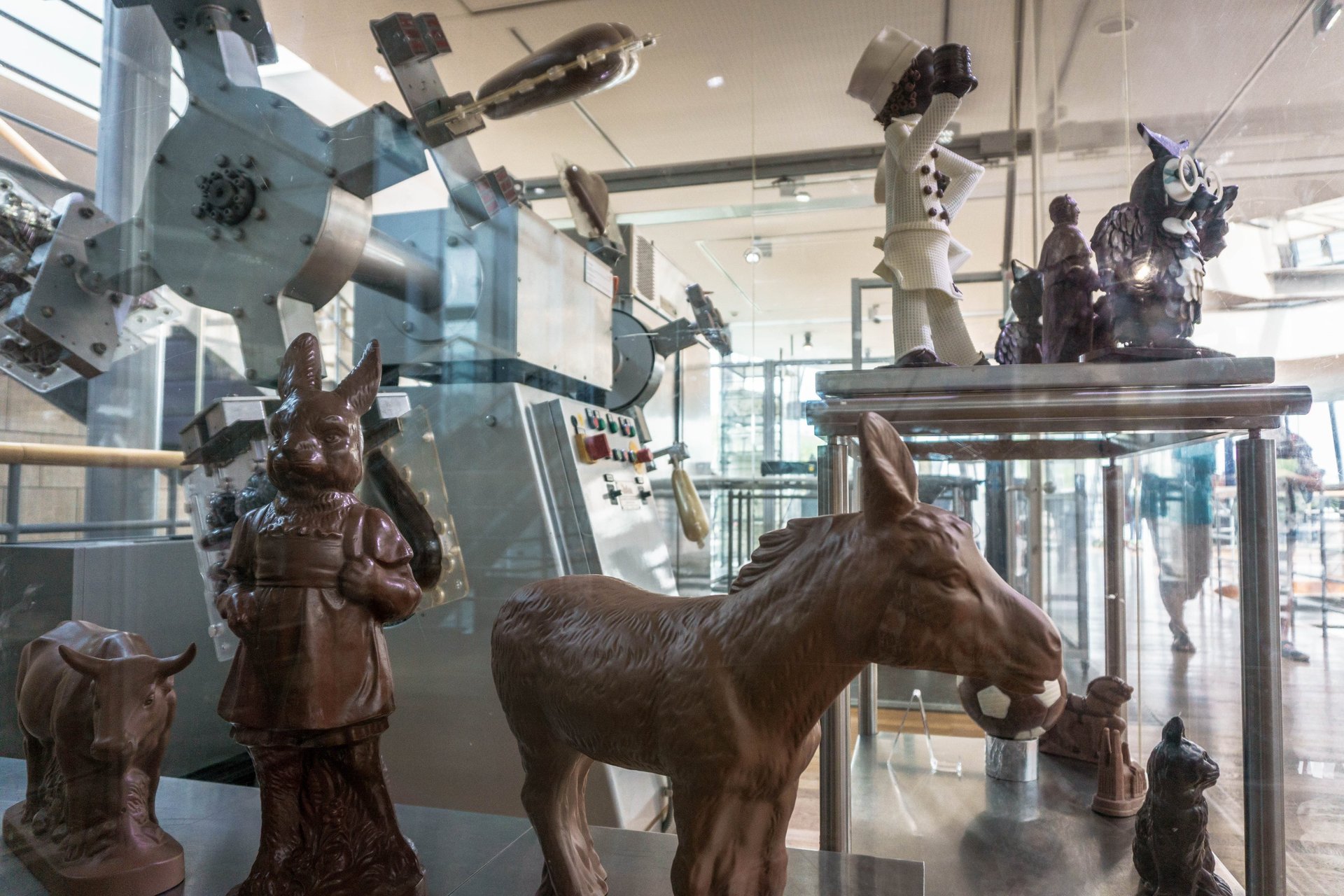
Every chocolate lover has imagined stepping into a real-life Willy Wonka world – a place where the air smells of sweet cocoa, where history is coated in a glossy layer of chocolate, and where tasting is not only allowed but encouraged. Around the world, dedicated chocolate museums and collections offer exactly that fantasy. They are sanctuaries of chocolate heritage and indulgence, inviting visitors on delicious journeys through time and across cultures. From grand flagship museums run by the biggest chocolate makers to charming little collections in unexpected places, these destinations provide a feast for all the senses.
Walk into one of these museums, and the first thing that hits you is often the aroma – a rich, warm smell of melted chocolate that seems to embrace you at the door. Then comes the visual spectacle: perhaps it’s a towering chocolate fountain pouring liquid cocoa silk, or a display of historical chocolate boxes and antique candy molds. You might hear the gentle hum of machinery churning cacao beans into velvet, or the excited chatter of fellow visitors marveling at a sculpture carved entirely out of chocolate. And inevitably, there is the taste, that moment when history and flavor meet on your tongue. These are not ordinary museums where you stand and stare at artifacts behind glass. Chocolate museums are interactive, multisensory experiences, part history lesson, part dessert buffet, and entirely enchanting.
Europe’s Love Affair with Chocolate
If chocolate has a second home outside its tropical origins, it’s Europe. Europeans embraced chocolate centuries ago and have turned it into an art form, a lucrative industry, and a cultural icon. Fittingly, Europe boasts some of the most extraordinary chocolate museums on the planet. Each one reflects a facet of the continent’s long romance with “food of the gods,” blending Old World charm with mouthwatering treats.
In Cologne, Germany, perched on the Rhine, stands one of the world’s premier chocolate museums: the Cologne Chocolate Museum (Imhoff-Schokoladenmuseum). Opened in 1993, this modern glass-walled building resembles a ship, as if ready to sail on a chocolate river. Inside, it takes visitors on a voyage through 5,000 years of chocolate history. You wander through a tropical greenhouse where actual cacao trees grow, their pods ripening in an imitation of the rainforest climate. Just beyond, vintage machines clatter and whir, demonstrating how bitter cacao beans are transformed into the smooth bars we know and love. Cologne’s museum is famed for its three-meter-high chocolate fountain – a gleaming golden structure where 1,400 liters of liquid chocolate cascade in a continuous loop. Attendants dip wafers into the flowing chocolate and hand them to wide-eyed visitors, a simple yet unforgettable taste of heaven. Exhibits also showcase beautiful moulds and ornate porcelain cups used for drinking chocolate in past centuries, underscoring how chocolate evolved from an elite luxury to an everyday delight. By the end of the tour, as you browse the gift shop for one last treat, you understand why this museum draws hundreds of thousands of visitors a year: it’s a pilgrimage site for chocoholics.
Travel southwest to Belgium, and you find yourself in a country practically synonymous with fine chocolates. Belgium actually offers multiple chocolate museum experiences – after all, this small nation has a giant sweet tooth. In medieval Bruges, a fairy-tale town of canals and cobblestones, the Choco-Story Museum resides in an old wine tavern dating to the 15th century. Within its creaking historic walls, Choco-Story Bruges lays out the story of cocoa, from the Aztec cocoa ceremonies to the spread of pralines and truffles across Europe. One moment you’re examining ancient Mayan drinking vessels, and the next you’re watching a live demonstration by an expert Belgian chocolatier showing how pralines are made by hand. Hints of vanilla and caramel waft through the air as he pours liquid chocolate into delicate shell molds. Bruges’ dedication to chocolate doesn’t end at the museum doors; the entire town is dotted with chocolate shops that feel as hallowed as chapels. After immersing yourself in Choco-Story’s exhibits, you can stroll the town, nibbling on artisanal bonbons and appreciating how deeply chocolate runs in the veins of Belgian culture.
Meanwhile, Brussels, the nation’s capital, boasts its own Museum of Cocoa and Chocolate (Musée du Cacao et du Chocolat), tucked in a charming 17th-century townhouse not far from the Grand Place. Opened in the late 1990s by Gabrielle Draps – whose family is behind the famed Godiva brand – this museum provides an intimate look at Belgium’s chocolate-making expertise. Antique chocolate molds line the shelves, bronze cocoa grinders and old advertising posters tell of 19th-century innovations, and a master chocolatier is often on-site crafting pralines from scratch. You can almost imagine Brussels in its belle époque, with the scent of cocoa roasting over coal fires in small ateliers. The highlight here is that personal connection: watching a truffle come to life under the guidance of a local artisan, then savoring that fresh-made morsel right on the spot. It’s an edible piece of history, melting on your tongue.
No tour of Europe’s chocolate havens would be complete without Switzerland, where milk chocolate was perfected and prestige brands abound. Near Zurich, the new Lindt Home of Chocolate is a futuristic temple to Swiss chocolate know-how. Opened in 2020, this sleek, immersive museum features a dramatic spiral staircase winding around none other than the world’s largest chocolate fountain – a whopping nine-meter-tall centerpiece with real molten chocolate flowing down a gigantic whisk into a giant Lindor truffle sculpture. It’s an audacious marriage of art and engineering, and it makes for one of those gasp-out-loud moments when you enter the atrium. The museum’s interactive exhibits then lead you through the science and craftsmanship of chocolate: you can try blending your own cocoa flavors virtually, smell the differing aromas of cacao from Ghana or Madagascar, and marvel at the precision of modern chocolate production in Lindt’s factory displays. If the Cologne museum feels like stepping into a chocolate factory of old, the Lindt Home of Chocolate feels like walking into the chocolate factory of the future – polished, high-tech, but still irresistibly delicious at heart. Lest anyone fear the Swiss have become too serious about chocolate, the endless free truffle samples along the tour prove that whimsy and indulgence are alive and well in Zurich.
Even Switzerland’s older chocolate institutions charm visitors. In the scenic village of Broc, Maison Cailler (the home of Nestlé’s Cailler brand, dating back to 1898) offers a tour that blends nostalgia and hands-on fun. You walk through atmospheric chambers that recreate how François-Louis Cailler founded one of the first mechanized chocolate factories in the world. You touch roasted cocoa beans, inhale the heady perfume of cacao nibs being ground, and watch as workers deftly wrap rows of bonbons by hand. By the grand finale – an all-you-can-sample tasting room – you might understand why a sleepy Alpine village became a must-stop on global chocolate pilgrimages.
Crossing the English Channel, we find Britain, a country not often celebrated for cuisine but absolutely passionate about sweets. In Birmingham, England, Cadbury World merges a museum with a theme-park vibe, built on the grounds of the original Cadbury chocolate factory. For Brits, Cadbury is more than a chocolate bar; it’s tied to childhood memories and even the social history of a town. Cadbury World capitalizes on that nostalgia. Families board a gentle ride through a chocolate “fantasy land” and wander interactive exhibits about how the Quaker Cadbury family revolutionized workers’ welfare in the 19th century by building Bournville, a garden village for factory employees (with free access to education and health care – funded by chocolate!). You can pour a cup of warm liquid Dairy Milk chocolate and top it with candies, or write your name in chocolate icing. It’s unabashedly fun and a little quirky – much like Roald Dahl’s fictional factory – but also enlightening to see how one brand shaped an entire community.
Up north in the medieval city of York, another British chocolate story unfolds. York was once home to confectionery giants Rowntree’s (creator of KitKat and Smarties) and Terry’s (famous for the chocolate orange), earning it the nickname “Britain’s Chocolate City.” Today, York’s Chocolate Story museum sits on a narrow street in the old city center, guiding visitors through the rich local heritage. Engaging guides share tales of the entrepreneurial Quaker families who brought chocolate to York and how they competed and innovated to create confections loved worldwide. In one room, you might find yourself standing before a recreated sweet shop from the 1900s; in another, you learn how a simple worker’s suggestion led to the invention of the KitKat bar, now among the most globally recognized chocolates. The tour is full of hands-on moments – quite literally, as you get to make your own chocolate at the end, swirling molten chocolate onto a marble slab and adding your favorite mix-ins. York’s museum brilliantly ties together social history, global trade (explaining how cocoa from West Africa reached English ports), and the simple joys of candy. It leaves visitors with a new appreciation for every candy bar and the people behind it.
Elsewhere in Europe, the story continues in dozens of delightful ways. In Perugia, Italy, the Perugina Casa del Cioccolato (House of Chocolate) invites you to discover the home of Italy’s beloved Baci chocolates. Perugia is known for its annual Eurochocolate festival, and at the company museum you can watch how Baci – those iconic hazelnut-filled kisses wrapped in love notes – are made and even take a class at their chocolate school. France, a nation of gourmands, has several little chocolate museums tucked around the country. In Strasbourg, Les Secrets du Chocolat reveals the mysteries of Alsatian chocolatiers through animated displays (and it conveniently sits on a “Chocolate Route” of local factories and shops you can follow through the region). In the Basque town of Bayonne, often considered the chocolate gateway of France (chocolate arrived there first via Spain), a small museum celebrates how French craft blended with cocoa beans from the New World to create a booming trade. One French museum in the Alpine town of La Côte-Saint-André even focuses entirely on chocolate sculpture, exhibiting life-size chocolate figures and animals – edible art as a testament to human creativity and chocolate’s versatility.
And let’s not forget Eastern Europe: even in Latvia on the Baltic Sea, chocolate has inspired a museum. Laima Chocolate Museum in Riga immerses visitors in the legacy of the country’s oldest confectionery brand. The exhibits recreate early 20th-century candy shops and show vintage Laima wrappers, tying the sweets to Latvian identity through wars, Soviet times, and independence. A tour here ends, fittingly, with a taste of the famous Laima hazelnut chocolate, a small bite of resilience and tradition. This wide array of European chocolate museums – grand or small, historic or whimsical – underscores how deeply chocolate runs in the cultural veins. Each region tells the story through its own lens, but they all celebrate the same substance with almost religious reverence.
The Americas: From Sacred Cacao to Modern Bonbons
It’s only fitting that our journey shifts to the Americas, the birthplace of chocolate itself. Long before chocolate bars and bonbons, the Maya and Aztec civilizations treated cacao as sacred. They sipped bitter cocoa in royal rituals, used cacao beans as currency, and wove the tree into their mythologies. Today, the Americas host chocolate museums that honor this ancient heritage and trace the bean’s path from spiritual elixir to mass-market treat.
In Mexico City, a charming museum called MUCHO Museo del Chocolate is housed in a restored 1900s mansion. Step inside and you’re greeted by the aroma of roasted cacao and a vivid mural of cacao gods welcoming you. Mexico’s deep chocolate roots are on full display here: ornate Mayan drinking vessels, carved with glyphs, show how cacao was consumed as a frothy, spiced drink. You learn that the word “chocolate” likely comes from the Nahuatl word xocolātl, meaning “bitter water,” harkening back to those unsweetened original beverages. One room lets you peer at preserved cocoa pods and the insects that pollinate them, highlighting nature’s role in this delicacy. Another is dedicated to the era of the Spanish conquest, when Europeans first encountered chocolate and began adding sugar and cinnamon, forever changing its fate. MUCHO doesn’t just dwell in the past – it’s also an active chocolate workshop. Often you’ll find a chocolatier grinding beans on a traditional metate (a stone grinder) or see visitors trying their hand at conching chocolate. The experience winds down in a boutique café where you can savor authentic Mexican hot chocolate whipped up with a wooden molinillo stirrer – a recipe unchanged for centuries. The bittersweet sip, with hints of chili and vanilla, connects you directly to chocolate’s indigenous origins.
South of Mexico, throughout Central America and the Andes, you’ll find a number of hands-on “choco museums” often simply named ChocoMuseo. Rather than grand institutions, these are intimate, workshop-focused stops catering to travelers curious about cacao. In Antigua, Guatemala, for instance, the local ChocoMuseo location sits in a colonial-era courtyard. Here you can join a “bean-to-bar” class where you roast cocoa beans on a clay comal, peel them, grind them, and eventually create your own rustic dark chocolate bar to take home. Laughter often fills the courtyard as participants discover just how much effort ancient peoples put into making their chocolate drinks and how marvelous the results taste. Similar interactive museums run in Peru (Lima and Cusco), as well as in the Dominican Republic and other cacao-growing destinations. They are half museum, half workshop: you’ll see small exhibits about the local cacao farms and the history of cultivation, then roll up your sleeves and become an honorary chocolatier for a day. These places might lack the scale of a corporate museum, but they deliver something perhaps more meaningful – a connection to the land where cacao grows and to the people who have farmed it for generations. It’s one thing to read about how the Aztecs revered cacao; it’s another to stand on a plantation in Punta Cana, crack open a fresh cocoa pod, taste its tangy-sweet pulp straight off the seeds, and understand on a sensory level why this plant was deemed a gift from the gods.
North America’s chocolate museums tend to celebrate the modern industrial and commercial boom of chocolate. Nowhere is this more evident than in Hershey, Pennsylvania – a town literally built on chocolate. At Hershey’s Chocolate World, the lines between museum, theme park, and brand experience blur into pure confectionery spectacle. Streets have names like Chocolate Avenue and Cocoa Avenue; the air smells faintly sweet year-round. The center of it all is an expansive complex where you can take a free chocolate tour ride (complete with singing mechanical cows explaining how milk chocolate is made), create your own custom candy bar in a mock factory assembly line, and stock up on every Hershey product imaginable. But tucked among the rides and shops is The Hershey Story museum, which focuses on the life of Milton Hershey and the broader tale of chocolate in America. Glossy exhibits chronicle Hershey’s rise from bankrupt caramel maker to successful industrialist who innovated mass-market milk chocolate and built a philanthropic empire, including this very town. Vintage photographs show early 20th-century workers pouring chocolate in the original factory, while interactive displays let you taste single-origin warm drinking chocolates from places like Venezuela or Ghana, to compare flavors of different terroirs. A favorite stop for visitors is the Chocolate Lab, where you can sign up for a class to learn how to make molded chocolate or truffles – a playful nod to Milton Hershey’s own experiments in candy-making over a century ago. By the end of a Hershey visit, you’ve not only traced the history of an American chocolate bar, you’ve lived and breathed (and certainly tasted) it in countless forms.
While Hershey is an empire unto itself, other North American chocolate museums offer more niche delights. Up in St. Stephen, New Brunswick, Canada, the Ganong Chocolate Museum celebrates a venerable family business that dates to 1873. This small town calls itself “Canada’s Chocolate Town,” and for good reason: Ganong was the first company in North America to sell wrapped chocolate bars, and it even invented the heart-shaped chocolate box that now defines Valentine’s Day gestures. The museum, set in a former factory building, charms visitors with its old-time candy store recreation and antique equipment displays. You can watch golden caramel being poured and hand-cut for their signature chicken-bone candies (a cinnamon-spiced chocolate treat, despite the quirky name), or see how a foot-powered wrapping machine from the 1920s still deftly swaddles chocolates. St. Stephen as a community lives and breathes chocolate history, even hosting a week-long Chocolate Festival every August where the town reenacts the Great Chocolate Mousse War (an eccentric, chocolatey bit of local lore) and hands out plenty of sweets. It’s a reminder that behind every famous chocolate brand is often a proud town or region that nurtured it.
Elsewhere on the continent, you find unique angles on chocolate, too. In New York City, an outpost of the global Choco-Story museum (backed by renowned pastry chef Jacques Torres) opened a few years ago, blending the local artisan chocolate scene with historical exhibits for urban explorers. In Orlando, Florida, known for its love of attractions, the World of Chocolate Museum holds guided tours through a hall of astonishing chocolate sculptures – from a miniature Eiffel Tower to a life-sized sculpture of Michelangelo’s David – each carved entirely out of chocolate. Walking among these sculptures, one can’t help feeling awe at the edible artistry and a bit of anxiety about the ever-present Florida heat! The tour is both entertaining and educational, explaining how these huge pieces are made and maintained, and it ends with a delightful tasting of gourmet chocolates from around the world. Even places not typically on the radar for chocolate have found ways to join the party: Bariloche, Argentina – a Patagonian town with Swiss roots – has built a reputation as the “chocolate capital” of Argentina, with a small museum dedicated to its European immigrant chocolatiers and an annual chocolate festival that erects a giant 800-meter chocolate bar down the main street for spectators to break and share. Across the Americas, whether in tropical cacao-growing zones or the chilly northern climes where hot cocoa soothes the soul, chocolate museums and festivals keep popping up, proving that the New World’s gift to the Old World has become a treasured possession returned in style.
Asia’s Chocolate Adventures and Beyond
Not to be outdone, Asia and other parts of the globe have embraced the chocolate museum trend with creativity and fervor. It might surprise some, but countries without a long tradition of chocolate-making have turned their curiosity into fantastical chocolate experiences, underscoring the truly global adoration of this treat.
Take Japan, for example. The Japanese may not have grown up with chocolate the way Europeans or Americans did, but they’ve certainly caught on in style. In the city of Sapporo on Japan’s northern island of Hokkaido, the Shiroi Koibito Park is a chocolate theme park that delights visitors of all ages. Named after a famous local white chocolate cookie, this park feels like stepping into a storybook. There’s a replica Victorian-style mansion trimmed in white and pink, a courtyard with a working old-fashioned carousel, rose gardens, and even a miniature railway – all whimsically designed around a chocolate-and-cookies theme. The actual factory tour takes you along an elevated walkway where you watch through glass walls as hundreds of Shiroi Koibito cookies are meticulously assembled, coated in chocolate, and packaged. Interspersed are museum exhibits displaying a dizzying collection of historic chocolate box tins and wrappers from around the world, as well as antique cups and saucers that once held Europe’s aristocratic hot chocolate. Periodically, music plays and mechanical puppets pop out of a cuckoo clock tower in the courtyard, singing cheerful songs about sweets. It’s equal parts amusement park and museum, where the line between education and entertainment blurs in a very Japanese fashion. And of course, before you leave, you can try your hand at decorating your own cookie in a workshop, or indulge in a deluxe parfait at the on-site café. Shiroi Koibito Park illustrates how a country that once imported all its chocolate has made the culture its own, blending nostalgia for Europe’s golden age of confectionery with Japan’s love of kawaii (“cute”) presentation and meticulous hospitality.
In nearby South Korea, an ambitious chocolate museum stands in an unlikely spot: the volcanic island of Jeju. The Chocolate Museum in Jeju (초콜릿 박물관) declares itself the second-largest chocolate museum in the world, after Cologne’s. Housed in a fortress-like structure built from the island’s dark volcanic stone, it feels a bit like a chocolate castle. Inside, visitors find exhibits that start from the very basics – detailing how cacao is cultivated and the importance of fermentation and roasting – then move to the history of chocolate’s journey from Mesoamerica to Europe to Asia. What gives the Jeju Chocolate Museum its character is the personal touch: it was founded by a Korean chocolate aficionado who studied in Belgium, and his collection of vintage chocolate labels, cocoa bean sacks, and even classic chocolate-making machines forms the core of the displays. One hall contains an array of international chocolate packaging through the decades, giving a pop culture timeline via candy bars. Another room surprises many: a tropical greenhouse (yes, even on this windy cool island) where a few cacao trees are carefully nurtured, showing that with a little effort, cacao can grow outside the equatorial belt. As you wander, you might stumble upon a sculpture of a guitar or a bust of a famous figure, all made of chocolate and preserved behind glass – because why not? By the end of the visit, Jeju’s cafe offers handmade pralines and cups of rich hot chocolate. Sipping while looking out at the island’s sea cliffs, visitors often reflect on the improbable journey of chocolate. From equatorial jungles to one of Asia’s farthest flung corners, the love of chocolate truly knows no bounds.
China, too, has caught chocolate fever. In the city of Wuxi, not far from Shanghai, a cutting-edge chocolate museum was recently unveiled that blends local heritage with a sweet twist. Wuxi’s museum designers took inspiration from the city’s ancient canals and famed Taihu Lake, incorporating flowing water motifs into a sleek, modern interior. The museum is nestled near a centuries-old temple, bridging past and present. On the second floor, visitors find themselves stepping into what looks like a traditional Chinese teahouse – except the decor is all about chocolate. Antique-looking wooden shelves display historically styled chocolate sets and molds, and panels explain how chocolate first entered China as an imported curiosity. The third floor, by contrast, bursts with modern whimsy: a trendy café bar where the counter looks like a cascade of melted chocolate, and behind it a series of whimsical art installations made of chocolate or cocoa-inspired shapes. There’s even a hands-on workshop for kids to make their own confections, proving that an interactive spirit is universal to chocolate museums everywhere. Though China produces relatively little chocolate compared to Europe or the U.S., its newly affluent consumers have become big chocolate fans, and museums like this – along with chocolate theme parks in Shanghai and Hong Kong – have sprung up as both marketing tools and attractions. They represent a new frontier, where chocolate’s story is being retold for an audience whose grandparents might never have tasted the stuff, but for whom chocolate is now a symbol of modern enjoyment.
Beyond Asia, other unexpected locales are joining the chocolate museum map. In the Middle East, where cacao doesn’t grow but chocolate is beloved, Dubai has hosted seasonal chocolate showpieces and Qatar opened a chocolate festival with mini-museums showcasing artisan chocolatiers. In Australia, the Phillip Island Chocolate Factory (also known as Panny’s Amazing World of Chocolate) offers a quirky down-under spin on the concept: visitors can see a chocolate replica of Michelangelo’s David, play a mini chocolate-themed game arcade, and even put a coin into a machine that pours out a customized chocolate bar before their eyes. It’s part museum, part interactive playground – and wholly indicative that chocolate tourism has no borders. And on the flip side of the global cocoa journey, back in Africa where much of the world’s cocoa is grown, there are fewer formal chocolate museums, but some pioneering efforts are underway. In Ghana and Côte d’Ivoire, the heartlands of cocoa farming, local entrepreneurs and global cocoa companies have begun setting up visitor centers on plantations. These rustic “museums” in the field might show you how farmers dry their beans on giant racks in the sun, let you taste fresh cacao fruit, and explain the economics that still leave many growers earning a fraction of a chocolate bar’s price. They are not glossy or touristy – in fact, a farm tour might end with a simple village-made chocolate if available – but they ground the entire world of chocolate in its agricultural origin. For a chocolate lover, that kind of experience can be as profound as seeing a world-class museum: it’s seeing the root of the supply chain, the humble beginnings of our beloved sweet.
Indulgence Meets Education: A Universal Experience
What is it that makes chocolate museums so compelling, no matter where they are? Perhaps it’s that chocolate itself is a great equalizer of joy – a simple pleasure known to so many, across every culture and age. A museum typically is about preservation and education, while chocolate is about indulgence and emotion. Marry the two, and you get that magical mix of learning and delight that few other subjects can achieve so effortlessly.
In these museums and collections around the globe, visitors find more than just facts and figures; they find personal connections. A grandmother in Brussels smiles reminiscing about the special chocolates of her childhood after seeing a vintage box at the cocoa museum. A young tech worker from Shanghai, who grew up without chocolate, beams like a kid as he tastes a freshly crafted Swiss truffle for the first time under the grand fountain in Zurich. A family from Delhi might bond over making chocolate lollipops together in an Orlando workshop, discovering that despite all their different tastes, everyone loves licking the bowl. In a way, each museum is telling the same story with local inflection: how humanity discovered this astonishing substance – part food, part culture, part science – and fell head over heels in love with it.
Interactive exhibits ensure that attention is never lost. Many chocolate museums, whether in Europe or Asia, have embraced technology to enrich the storytelling. Touchscreens might let you virtually cultivate a cacao farm or simulate the mixing of ingredients to see how white, milk, and dark chocolate differ. Holograms or 3D films might reenact the moment the Spanish conquistadors first encountered chocolate in Montezuma’s court. Some places incorporate playful quizzes, like “What type of chocolate personality do you have?” to engage visitors on a personal level. And nearly all have some form of tasting session, the crescendo of the visit, where education literally becomes edible. Sampling a high-cocoa dark chocolate versus a milky sweet chocolate and noting the difference, or trying a spicy hot cocoa made from an ancient recipe, brings the learning full circle to the palate. It’s edification by way of epiphany: taste this, and you’ll understand what we’ve been talking about.
Crucially, these museums also often spotlight contemporary issues and the future of chocolate. Many have exhibits on sustainability – acknowledging that the growing global sweet tooth has impacts on tropical ecosystems and farmers. It’s not uncommon to see information about fair trade practices, innovations in organic cacao cultivation, or the challenges of climate change on cocoa crops. Some even partner with local farmers or cooperatives: for instance, a chocolate museum might sell bars made from beans grown with sustainable methods, or display photos of cocoa farming communities that supplied ingredients for the chocolates you tasted. Thus, amid the enjoyment, visitors are gently reminded that chocolate’s story is still unfolding, and that they are now a part of it as conscious consumers.
For a general audience, the beauty of a chocolate museum is that you don’t need any prior knowledge or special interest in history or science to be captivated. The subject matter itself is enough to draw you in – it’s chocolate! – and once you’re there, you find yourself learning almost in spite of yourself. A child may come away excited about a fun day out and also unexpectedly informed about how plants grow in the rainforest. An adult who perhaps came along as an indulgence might leave with a newfound appreciation for artisan skills or an interesting anecdote about how their favorite candy bar got its name. These museums exemplify the notion that learning can be sweetest when it’s sugar-coated (quite literally, in this case).
A Global Pilgrimage for the Sweet at Heart
Visiting chocolate museums around the world can feel like a delightful form of travel alchemy – you journey via your taste buds and imagination as much as via planes or trains. Each stop on the global chocolate trail offers its own flavor of insight. In one country you might focus on ancient traditions, in another on industrial ingenuity, in a third on artistic expression or cutting-edge innovation. But string them together, and you start to see the larger mosaic of how a simple cacao bean has linked the world in so many surprising ways.
For the chocolate enthusiast, a well-curated museum or factory tour is as thrilling as a vineyard tour is to a wine lover. It’s an invitation to deepen your passion. And for the casual traveler or family looking for a fun day, it’s hard to top the universal appeal of chocolate. There is something inherently uplifting about watching people’s eyes light up as they taste a novel confection or recognize a beloved candy from childhood behind the display glass. You hear laughter, and the clink of spoons on porcelain saucers of hot cocoa in museum cafés, and the animated chatter of folks planning which treats to take home as souvenirs. In a world often divided by differences, here is a subject on which almost everyone can agree: chocolate is marvelous.
As we conclude our grand tour of global chocolate museums and collections, one thing becomes clear: these places are far more than tourist attractions. They are repositories of memory and culture, preserving how humanity’s relationship with chocolate has evolved from era to era and place to place. They are living classrooms where you can touch a cacao pod, taste a pulp, swirl melted chocolate, and feel the history rather than just read it. And perhaps above all, they are celebrations – celebrations of ingenuity (both human and nature’s), of the senses, and of sheer joy.
In the end, whether you find yourself under the shadow of a giant chocolate fountain in Switzerland, in a tiny tropical workshop in Peru, or in a nostalgic gallery in England, each chocolate museum offers the same invitation. It whispers to the visitor: slow down, take a bite, and savor this story. It’s the story of how something as small as a cocoa bean captivated the world. And it’s a story that is still being written, one delicious museum visit (and one sweet bite) at a time.
Contact
info@menloparkchocolatecompany.com
© 2025 Menlo Park Chocolate Company. All rights reserved.
Subscribe to receive special offers and to hear about new product drops!